
Switchboards
How to tell if your switchboard needs an upgrade
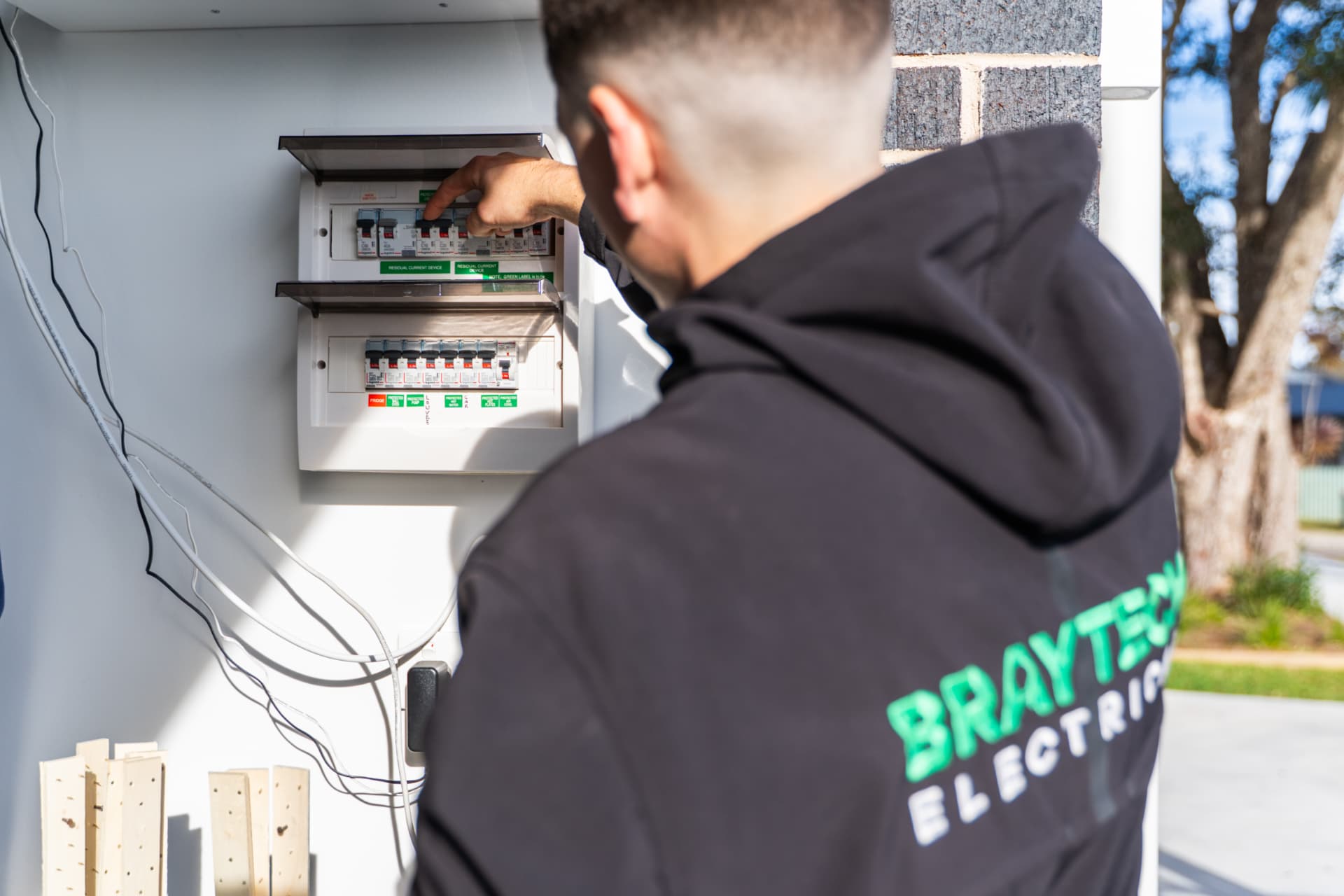
Every circuit in your house runs through the switchboard. In a lot of the homes we work in across the Sutherland Shire and St George, it is also the one part of the electrical system nobody has touched since the place was built.
25 August 2026 · 6 min read · Braytech Electrical
Why the switchboard matters more than it looks
A switchboard does two jobs. It splits your supply into circuits, and it disconnects those circuits when something goes wrong. Everything else in the house depends on it doing the second job quickly.
Older boards were built for a much smaller electrical load. A home in the sixties ran lights, a fridge, a stove and not a great deal else. The same board is now being asked to carry air conditioning, an induction cooktop, a dishwasher, a dryer, home office equipment and sometimes an EV charger. The board has not changed, but everything plugged into it has.
Signs your board is due
You do not need to open anything to spot most of these. A look at the front of the board plus a think about how your power behaves day to day tells you a lot.
- Ceramic rewireable fuses with fuse wire instead of circuit breakers
- No safety switches (RCDs) protecting your power and lighting circuits
- Breakers that trip when a few appliances run at once
- Lights that dim noticeably when the aircon or oven kicks in
- Scorch marks, melted plastic, discolouration or a burning smell at the board
- A buzzing, humming or crackling noise from the enclosure
- No spare ways left, so nothing new can be added
- Circuit labelling that is handwritten, faded, wrong or missing entirely
Fuses, breakers and safety switches are not the same thing
This is the part most homeowners are never told. A fuse or a circuit breaker protects the cable in your walls from overheating. It does not protect a person. It will happily carry enough current to kill someone without ever tripping.
A safety switch, or RCD, is different. It watches the current flowing out against the current coming back, and if some of it is leaking to earth through a faulty appliance, damaged cable or a person, it cuts the supply in a fraction of a second. If your board has breakers but no RCDs, you have cable protection and no people protection.
If you are seeing repeated tripping rather than no protection at all, that is a different problem. We covered it separately in why your safety switch keeps tripping.
Flickering lights and nuisance tripping
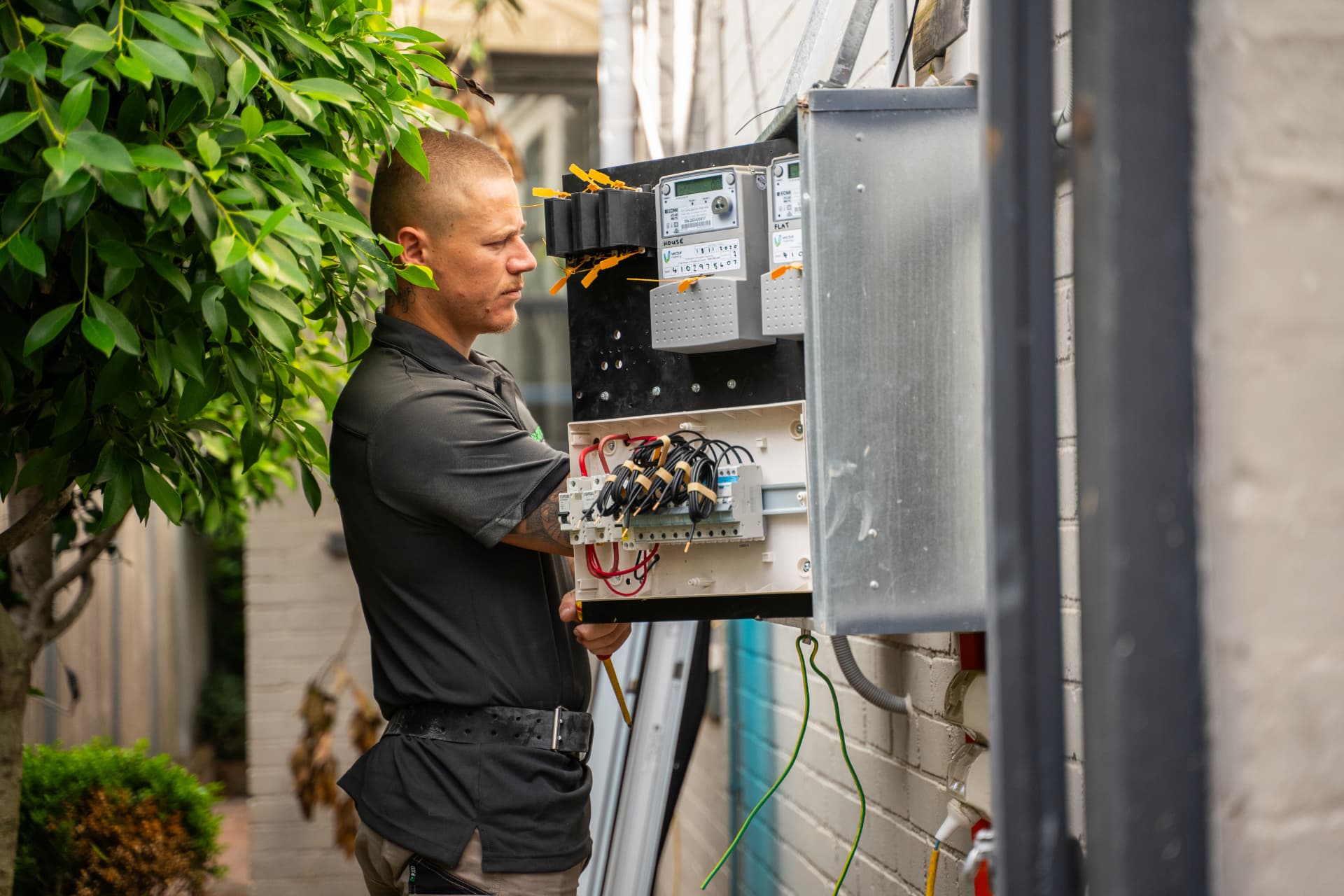
Most people live with these for years and treat them as a quirk of an old house. They are usually a symptom of something specific: an overloaded circuit, a loose connection, degraded cable, or a board that simply has too few circuits for how the house is used now.
A loose or heat damaged connection inside a board is one of the more common causes of electrical fires in older homes. It is also one of the easiest things to find when someone actually looks.
When to call an electrician
Book an inspection rather than waiting if any of the following apply. None of them are emergencies on their own, but all of them mean the board should be assessed properly.
- You have ceramic fuses or no safety switches
- You can smell burning or see heat damage anywhere near the board
- Breakers trip regularly with normal household use
- You are adding aircon, a pool, a granny flat, solar or an EV charger
- You are renovating and adding circuits
- You have just bought the place and have no idea what is behind the cover
What an upgrade actually involves
We isolate the supply, replace the enclosure, and install modern circuit breakers with RCD protection across the circuits. Every circuit is then tested, labelled and certified before we hand it back. Most straightforward residential switchboard upgrades are a one day job.
Sometimes the work goes past the board. If the supply from the street, the metering or the point of attachment needs attention, that is Level 2 territory and it needs an accredited service provider. Braytech is Level 2 ASP accredited, so the same team handles both sides instead of you booking a second contractor and coordinating between them.
If you are moving to three phase for heavier loads, that is planned at the same time. A three phase upgrade done alongside the board is far less disruptive than doing it later.
Working in older Shire and St George homes
The housing stock here has patterns. Brick homes around Sutherland and Miranda often have the original board in a hallway cupboard with decades of additions layered on it. Waterfront and older weatherboard homes near Cronulla get salt air and moisture into enclosures that were never sealed for it. Across the St George side we see a lot of boards that were part upgraded years ago and never finished.
Knowing the patterns means we spend less time guessing and more time on the actual fix.
If any of this sounds like your board, get it looked at before it decides the timing for you. We will tell you honestly whether it needs an upgrade now or can wait.
Related services
Want it looked at properly?
One licensed, family owned team across the Sutherland Shire and St George. Lic. 376321C.