
Fault finding
Why does my safety switch keep tripping?
A tripping safety switch is almost never a faulty safety switch. It is a device detecting current escaping somewhere it should not be, and shutting off before that current finds a person.
11 August 2026 · 5 min read · Braytech Electrical
What a safety switch is actually doing
A safety switch, or RCD, compares the current flowing out on the active with the current returning on the neutral. Those two numbers should match. When they do not, the difference is leaking to earth, and the switch opens in about 30 milliseconds.
That leak might be through damp insulation, a failing heating element, a nicked cable in the roof, or a person touching something live. The switch cannot tell the difference, which is exactly why it is worth having.
Narrow it down yourself first
Before you call anyone, this takes about ten minutes and often points straight at the culprit. It also saves time on site if you do end up needing us.
- Unplug everything on the affected circuit, including things you never unplug
- Reset the safety switch
- If it holds, plug appliances back in one at a time, waiting a minute between each
- The appliance that trips it again is your fault
- If it trips with nothing plugged in, the fault is in the fixed wiring, not an appliance
The usual causes
Appliances are the most common by a wide margin. Anything with a heating element or a motor tends to fail this way as it ages: kettles, toasters, dishwashers, washing machines, clothes dryers, old fridges, and outdoor power tools that have lived in a damp shed.
Moisture is the next one. Water in an outdoor power point, a leaking roof above a downlight, a bathroom exhaust that has taken steam for fifteen years, or a garden light with a cracked seal. These are the faults that appear after rain and disappear once things dry out, which makes them frustrating to chase.
Then there is the wiring itself. In older homes, cable insulation degrades, particularly in hot roof spaces or where rodents have been at work. Nail and screw damage from picture hanging, shelving or a past renovation is another regular find.
Occasionally it genuinely is the device. RCDs are mechanical and they do wear out, which is why the test button is worth pressing every few months.
Why resetting it over and over is not a fix
Every reset puts the circuit back into the state that caused the leak. If the cause is a degraded cable or water where it should not be, you are relying on the safety switch to keep catching it, and treating a warning as background noise.
If the switch will not reset at all, trips repeatedly, or trips with nothing connected, leave it off and get it looked at. That is the point where guessing stops being useful.
How a proper fault find works
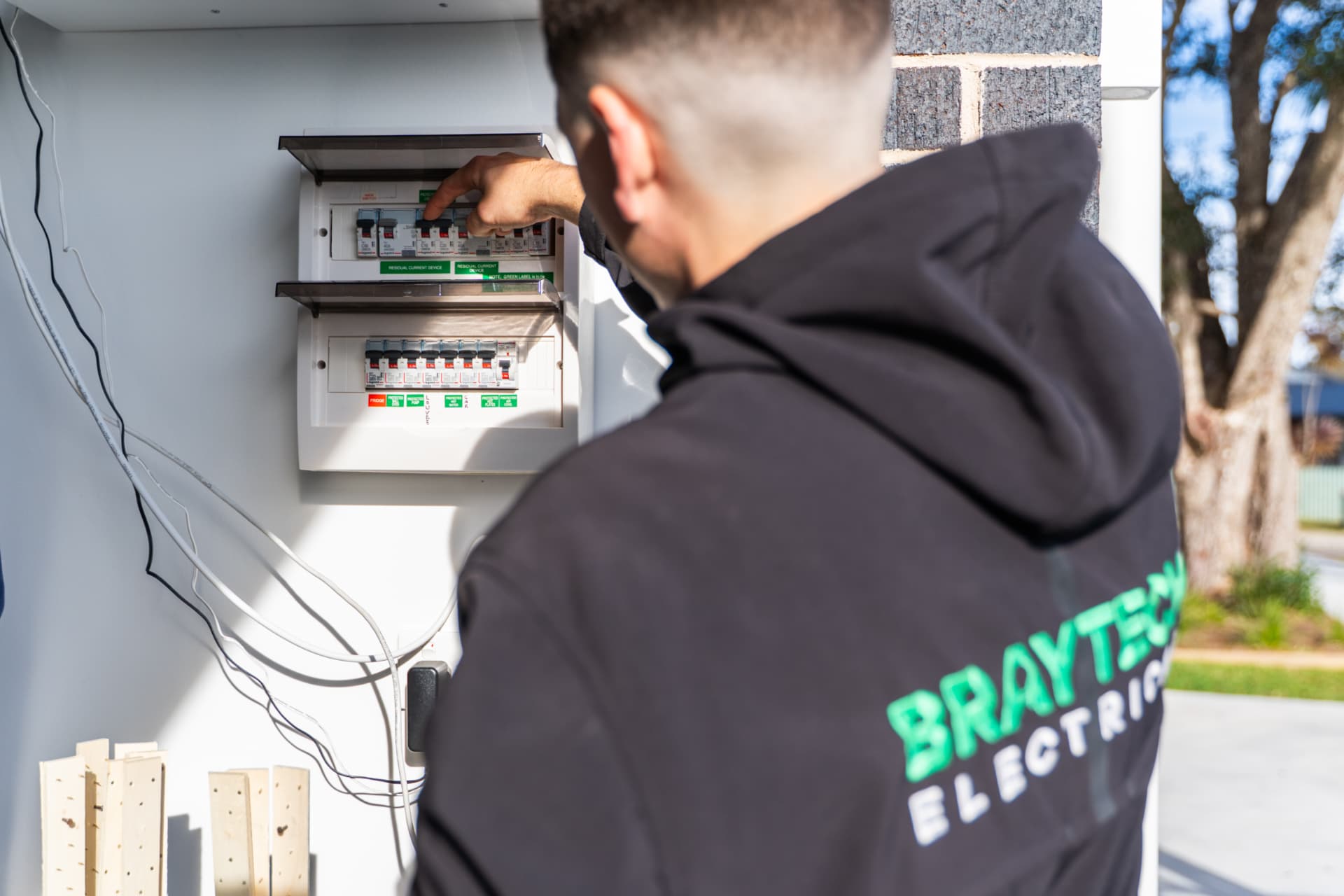
We isolate and test circuit by circuit using insulation resistance testing, which measures how well the insulation is holding up between conductors. That tells us which circuit is at fault, and then which section of it, rather than replacing parts and hoping.
From there the repair is usually contained: a damaged section of cable, a failed fitting, a water affected point, or a connection that has worked loose. Our electrical fault finding work is priced around the diagnosis, so you know what is wrong before you commit to the repair.
If testing shows the board itself has no RCD protection on some circuits, or is still running fuses, we will talk to you about a switchboard upgrade rather than patching around it.
When to treat it as urgent
Most tripping can wait until the next working day. Some should not.
- Burning smell, smoke, or heat at a switch, outlet or the board
- Sparking or arcing from a fitting or power point
- Tripping that started after water entered the roof, walls or a meter box
- You have lost power to essential circuits and cannot restore them safely
Local context
Coastal homes around Cronulla and the bay suburbs get salt and moisture into outdoor points and garden lighting, which shows up as tripping after weather. Older brick homes across the Sutherland Shire and St George tend to fail at the roof space cabling instead. Both are solvable, and both benefit from testing rather than swapping parts.
If it is late, unsafe or you have no power at all, our emergency electrician service covers after hours work across the same area.
If you have worked through the appliances and it still trips, the wiring needs testing. Call and describe what happens and when, and we will tell you what is likely going on.
Related services
Want it looked at properly?
One licensed, family owned team across the Sutherland Shire and St George. Lic. 376321C.